All India Free DeliveryBuy more Save MoreYour Perfect Gifting PartnerAll India Free DeliveryBuy more Save MoreYour Perfect Gifting PartnerAll India Free DeliveryBuy more Save MoreYour Perfect Gifting PartnerAll India Free DeliveryAll India Free DeliveryBuy more Save MoreYour Perfect Gifting PartnerAll India Free DeliveryBuy more Save MoreYour Perfect Gifting PartnerAll India Free DeliveryBuy more Save MoreYour Perfect Gifting PartnerAll India Free DeliveryAll India Free DeliveryBuy more Save MoreYour Perfect Gifting PartnerAll India Free DeliveryBuy more Save MoreYour Perfect Gifting PartnerAll India Free DeliveryBuy more Save MoreYour Perfect Gifting PartnerAll India Free Delivery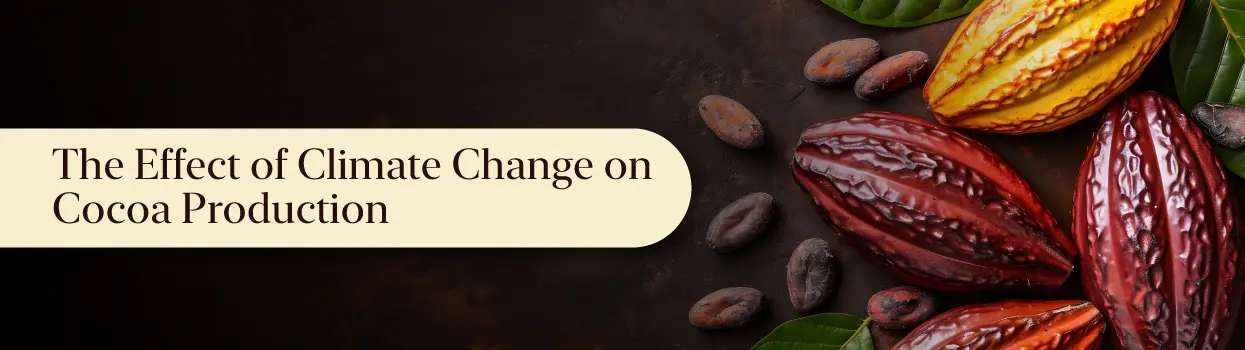
Cocoa, the key ingredient in chocolate, has become an emerging agricultural commodity in India, with Kerala, Karnataka, Andhra Pradesh, and Tamil Nadu leading its production. While cocoa farming in India is growing steadily, climate change poses a significant threat to its sustainability. Rising temperatures, erratic monsoons, increased pest infestations, and soil degradation are impacting cocoa yields, challenging farmers and the chocolate industry alike. This article explores the effects of climate change on cocoa production in India, particularly in Kerala, and highlights strategies for sustainable farming.
Cocoa Cultivation in India and Kerala
India’s cocoa industry is primarily driven by smallholder farmers, with most cultivation occurring in Kerala, Karnataka, Andhra Pradesh, and Tamil Nadu. Among these, Kerala has historically been the leader in cocoa production due to its ideal tropical climate, abundant rainfall, and high humidity, which provide a suitable environment for cocoa cultivation. The state has seen consistent growth in cocoa farming over the past few decades, benefiting from high domestic demand and support from agribusiness firms.
Cocoa is commonly grown as an intercrop with coconut, areca nut, and rubber plantations, helping farmers diversify their income. This system not only improves farm profitability but also enhances ecological balance. However, climate change is altering the stability of these growing conditions, putting the future of cocoa farming in India at risk.
The Impact of Climate Change on Cocoa Farming in India
1. Rising Temperatures and Heat Stress
Cocoa trees thrive in a temperature range of 21-32°C (70-90°F). However, recent climate patterns indicate a rise in average temperatures, particularly in Kerala and Karnataka. Excessive heat stresses cocoa plants, causing reduced flowering, poor bean quality, and lower yields. Higher temperatures also accelerate moisture loss, increasing the demand for irrigation. In some areas, temperature spikes beyond 35°C have been observed, which severely affect the tree's ability to retain pods and sustain bean quality.
2. Erratic Rainfall and Monsoon Disruptions
Cocoa trees require well-distributed rainfall between 1,000-2,500mm per year. In Kerala, the traditional monsoon cycle is becoming increasingly unpredictable due to climate change. Farmers face delayed or insufficient rainfall, leading to prolonged dry spells, while excessive rains cause waterlogging and fungal diseases such as black pod disease. Additionally, Kerala’s reliance on the Southwest and Northeast monsoons makes cocoa farming particularly vulnerable to climate variations. A shift in rainfall patterns reduces soil moisture levels, affecting pod development.
3. Increased Pest and Disease Attacks
Warmer temperatures and high humidity create favorable conditions for pests and diseases that threaten cocoa crops. In Kerala, farmers report increased occurrences of:
-Black pod disease (caused by Phytophthora fungi), which thrives in excessive moisture and affects cocoa pods.
-Cocoa pod borer, a pest that damages pods and reduces yield.
-Mirids (capsid bugs), which feed on young cocoa shoots, causing damage to the plant.
-Helopeltis theivora, a major pest affecting cocoa crops in Kerala, feeding on young leaves and pods, leading to significant losses.
As pest populations increase, farmers are forced to rely more on chemical pesticides, which can lead to environmental and soil health degradation.
4. Soil Degradation and Loss of Fertility
Frequent heavy rains lead to soil erosion in Kerala’s hilly cocoa-growing regions, depleting vital nutrients essential for healthy plant growth. In contrast, periods of drought cause soil compaction and reduced moisture retention, further impacting productivity. Deforestation and over-reliance on chemical fertilizers have exacerbated soil degradation. Cocoa farms situated on slope lands experience high rates of topsoil erosion, making it challenging for plants to access essential minerals.
5. Water Scarcity and Irrigation Challenges
While Kerala receives substantial rainfall, water availability during dry seasons is declining due to erratic climate patterns. Farmers who previously relied on natural rainfall are now forced to implement irrigation systems, increasing production costs. In regions like Karnataka and Tamil Nadu, where cocoa cultivation is expanding, water shortages pose a severe challenge to sustainability. The high-water demand from intercrops like areca nut and coconut adds further strain on irrigation resources.
6. Declining Pollination and Yield Reduction
Cocoa depends on specific pollinators, particularly midges (Forcipomyia spp.), for pod formation. Changing climate conditions, such as altered humidity levels and habitat loss, are reducing pollinator populations. This decline results in poor fruit set, lowering overall productivity.
Sustainable Solutions for Cocoa Farming in India
1. Agroforestry and Shade Management
Indian cocoa farmers, particularly in Kerala, are adopting agroforestry practices, where cocoa is grown under the shade of larger trees such as coconut and areca nut. This approach:
-Protects cocoa trees from extreme temperatures.
-Enhances soil moisture retention.
-Reduces the spread of pests and diseases.
-Improves biodiversity and promotes natural predators for pest control.
-Research suggests that integrating cocoa within mixed cropping systems improves farm resilience against climate extremes.
2. Water Conservation Techniques
To combat irregular rainfall, Indian cocoa farmers are implementing water conservation strategies, such as:
-Drip irrigation to provide controlled and efficient water supply.
-Mulching to reduce evaporation and maintain soil moisture.
-Rainwater harvesting to store and utilize excess water during dry periods.
-Contour bunding to reduce soil erosion in sloped regions.
3. Integrated Pest and Disease Management (IPM)
Sustainable pest control methods are being introduced, including:
-Use of organic pesticides and biocontrol agents like Trichoderma fungi to combat diseases.
-Encouraging natural predators such as ants to control pest populations.
-Pruning and farm sanitation to prevent disease outbreaks.
-Trap cropping to attract and manage pest populations without excessive chemical use.
4. Climate-Resilient Cocoa Varieties
Research institutions in India are working on developing drought-resistant and disease-resistant cocoa varieties. These improved strains are more adaptable to changing climate conditions, ensuring stable production. Organizations like ICAR-CPCRI (Central Plantation Crops Research Institute) and Kerala Agricultural University are playing a pivotal role in breeding improved cocoa hybrids.
5. Farmer Training and Support
Government and private organizations are supporting cocoa farmers through training programs on climate adaptation, sustainable farming techniques, and financial aid for irrigation infrastructure. Initiatives by companies like Kerala Agricultural University and Indian Cocoa Research Institute are helping farmers build resilience against climate change. More emphasis is being placed on precision farming techniques to improve productivity with minimal resource waste.
Future of Cocoa Farming in India
Despite the challenges posed by climate change, India’s cocoa sector has significant growth potential. With proper adaptation strategies, Kerala and other cocoa-producing states can enhance sustainability and meet the rising domestic demand for chocolate. Key factors that will shape the future of cocoa farming in India include:
-Expanding research on climate-resistant cocoa varieties.
-Promoting sustainable agroforestry practices.
-Enhancing water management systems.
-Providing financial support to small-scale farmers.
-Encouraging pollinator conservation strategies.
-Improving access to climate advisory services for farmers.
As a whole
Climate change is reshaping the landscape of cocoa farming in India, particularly in Kerala, where erratic monsoons, rising temperatures, and pest infestations threaten production. However, by embracing agroforestry, improved water conservation, pest management, and climate-resilient cocoa varieties, farmers can safeguard their livelihoods and sustain India’s growing cocoa industry.
For cocoa farming to thrive in India, collective efforts from farmers, researchers, policymakers, and the chocolate industry are essential. By investing in climate-smart agricultural practices, India can emerge as a stable and resilient cocoa-producing nation, ensuring a steady supply of high-quality cocoa for the domestic and global markets.